
Placing a Moveable Dwelling in NSW: What the Regulations Actually Say
One of the first questions people bring to us is about planning. Can they legally place The Oculus on their land? Will they need council approval? How long will it take?
Having spent decades building and renovating in the Northern Rivers, we have worked through most of the planning scenarios that come up. The honest answer, for most landholders in NSW, is that the path is clearer than they expect. The regulations are not a minefield — they are a framework, and once you understand where a road-legal moveable dwelling sits within it, the picture becomes straightforward.
This post sets out the relevant rules as plainly as we can. It is not legal advice — every property is different, and your first call before proceeding should always be to your local council or a planning consultant. But it should give you a working picture of what is possible, and why we designed The Oculus the way we did.
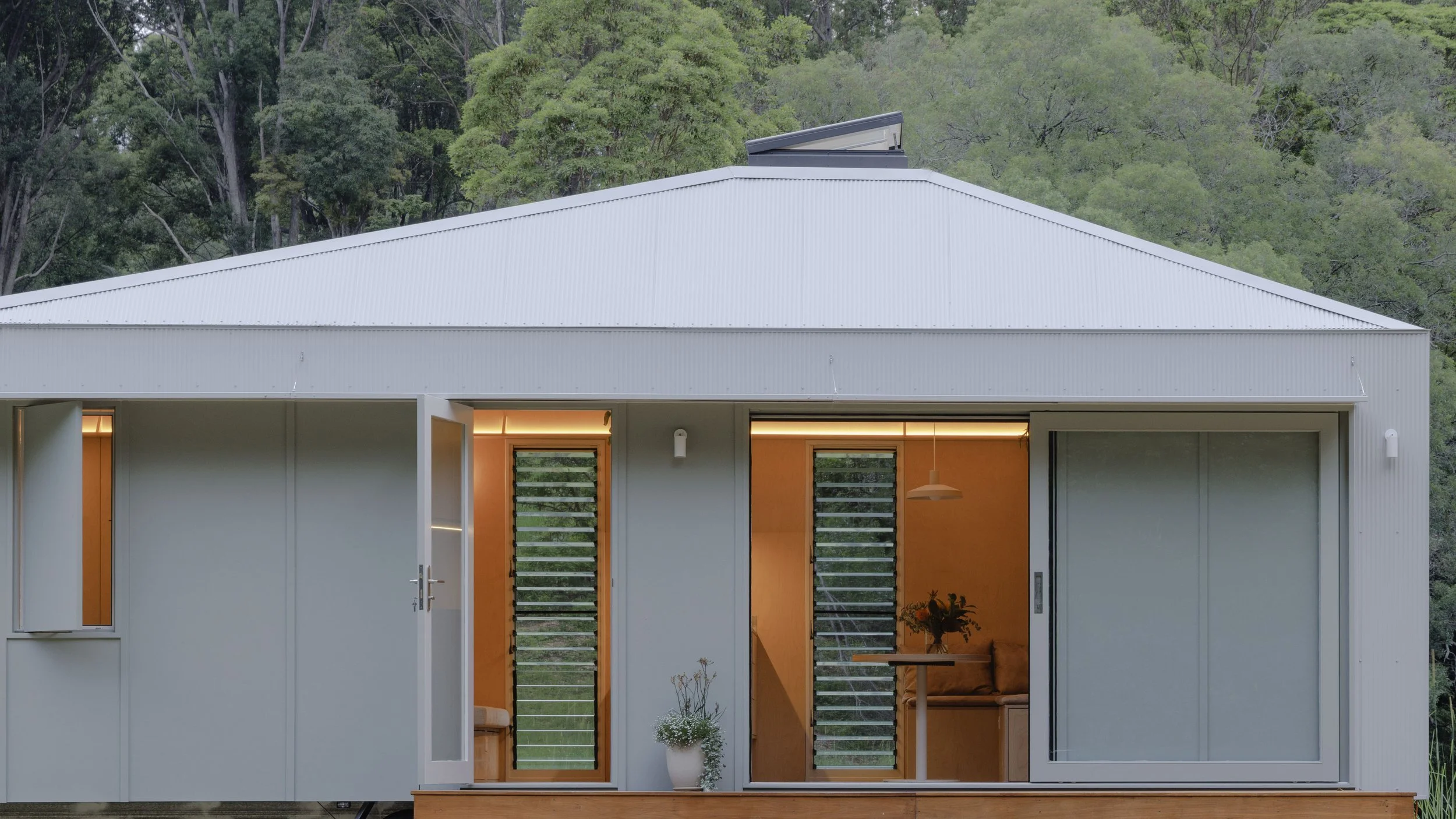
An Oculus with FC Sheeting Cladding (pictured) or alternatively thermally modified timber results in a lighter weight build.
The category that matters: registered trailer, not permanent structure
In NSW, the distinction between a dwelling on a foundation and one on a registered trailer is not cosmetic. It is the difference between two entirely different regulatory pathways.
The Oculus is built on a road-legal trailer and registered with Transport for NSW under the Road Transport Act 2013. To qualify, it must comply with Australian Design Rules for trailers: maximum width 2.5m, height 4.3m, length 12.5m including drawbar, total weight under 4.5 tonnes. Chris and Hayley have designed The Oculus to meet these specifications precisely — it can be towed by a suitably rated vehicle without oversized load permits.
If you are concerned about weight, we recommend using FC Sheeting Cladding (pictured) or alternatively thermally modified timber as well as reducing the amount of tiles used in the build or using a
That road-legal registration is the foundation of its DA-exempt status in most residential placements. Classified as a moveable dwelling rather than a permanent structure, it sits within a different part of the planning system — and that distinction shapes everything that follows.
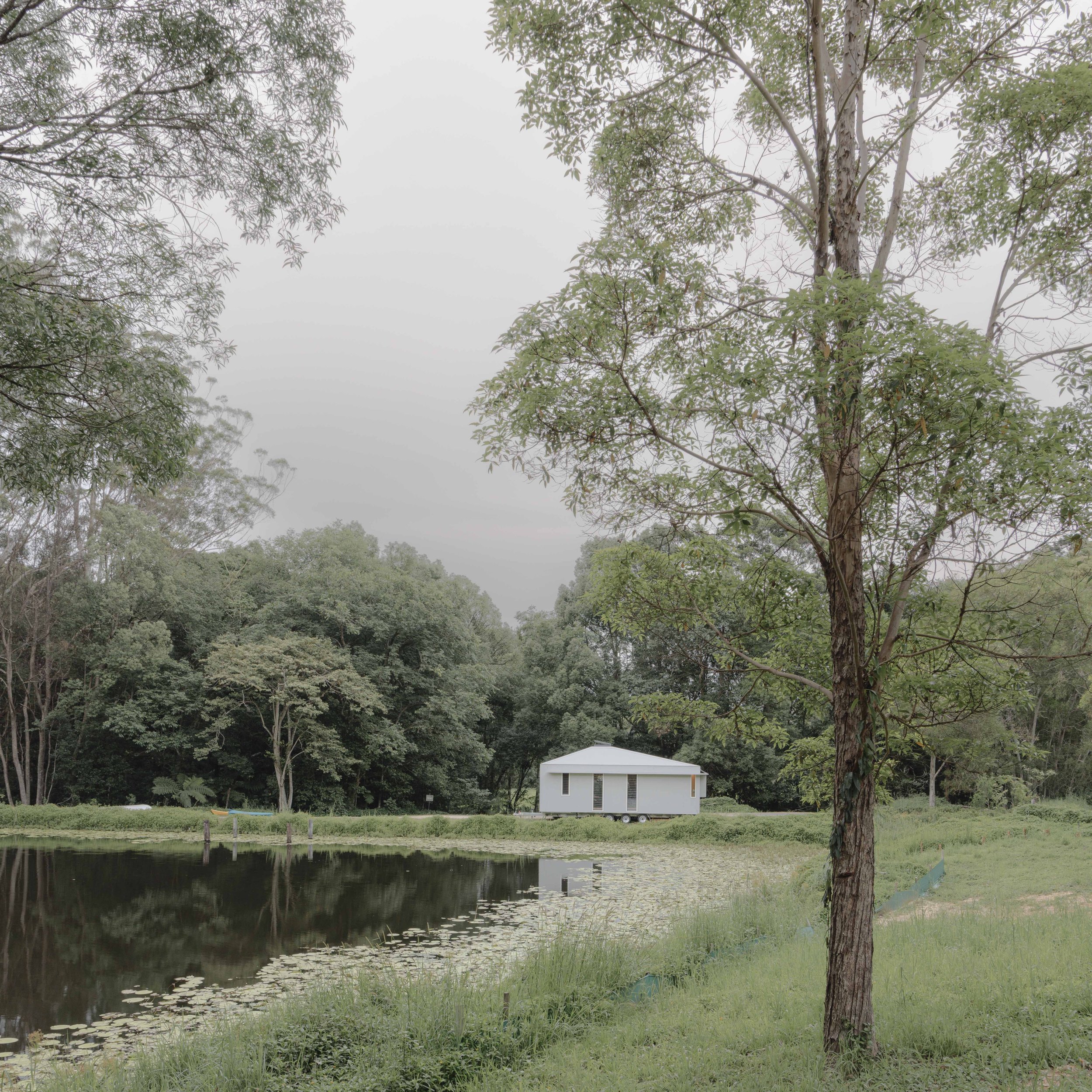
The Oculus bade model is 8.4m x 2.5m wide and built on a trailer, built in Bangalow, delivered home.
When you do not need a Development Application
The Local Government (Manufactured Home Estates, Caravan Parks, Camping Grounds and Moveable Dwellings) Regulation 2021 sets out the key exemptions under Clause 77. The most relevant for our residential customers:
On your own land, with an existing primary dwelling
If you own the property, there is an existing primary dwelling on it, and the person occupying The Oculus is you, a household member, or someone registered at that address — no council approval is required. There is no time limit on this arrangement, provided the structure is maintained as safe, structurally sound, and hygienic.
This covers the most common scenario we work with: a landholder placing The Oculus on their rural or semi-rural property as a secondary dwelling — for themselves, a family member, or an ageing parent. No DA. No council approval process. The structure arrives, you position it, connect services, and occupy it.
Guest and short-term use
For accommodating guests temporarily — up to two moveable dwellings, for stays of no more than two consecutive days per visit or 60 days total across a year — council approval is also not required. This is the framework that supports private short-term rental use on landholdings, within those limits
When a Development Application is required
Transparency matters here. There are circumstances where council approval is needed, and it is worth knowing them clearly.
If a moveable dwelling is intended as the sole residence on a property with no existing primary dwelling — placing The Oculus on vacant land, for example — a DA is typically required. The council will assess zoning, utility access (water, sewage, power), and land use before approving long-term habitation.
Similarly, if a property's zoning or Local Environmental Plan restricts moveable dwellings — whether residential, rural, or environmentally sensitive — a DA will be necessary regardless of the exemptions above. Checking your LEP early is straightforward through the NSW Planning Portal, and it is the right first step for any property with overlays or restrictions.
For commercial operators — wedding venues, eco-retreats, glamping businesses — placing multiple structures or hosting guests beyond the 60-day threshold will typically require the property to be classified as a caravan park or camping ground. We work through these pathways with our commercial customers early in the conversation, before anything is committed.
A note on Byron Shire and the Northern Rivers
Byron Shire Council currently permits secondary dwellings in R2 residential zones without strict time limits for household use — part of the council's broader position on flexible housing. For rural properties, which make up the majority of our customer base in the hinterland, the applicable framework sits within the LEP and RU1/RU2 zoning.
Because we build in Bangalow and most of our residential customers are within the Byron, Lismore, Tweed, and Ballina council areas, we are well-versed in what local planners are looking for. If you are working through a specific property question, Ross can connect you with the right planning advice before anything is decided — get in touch at hello@retreathouse.com.au.
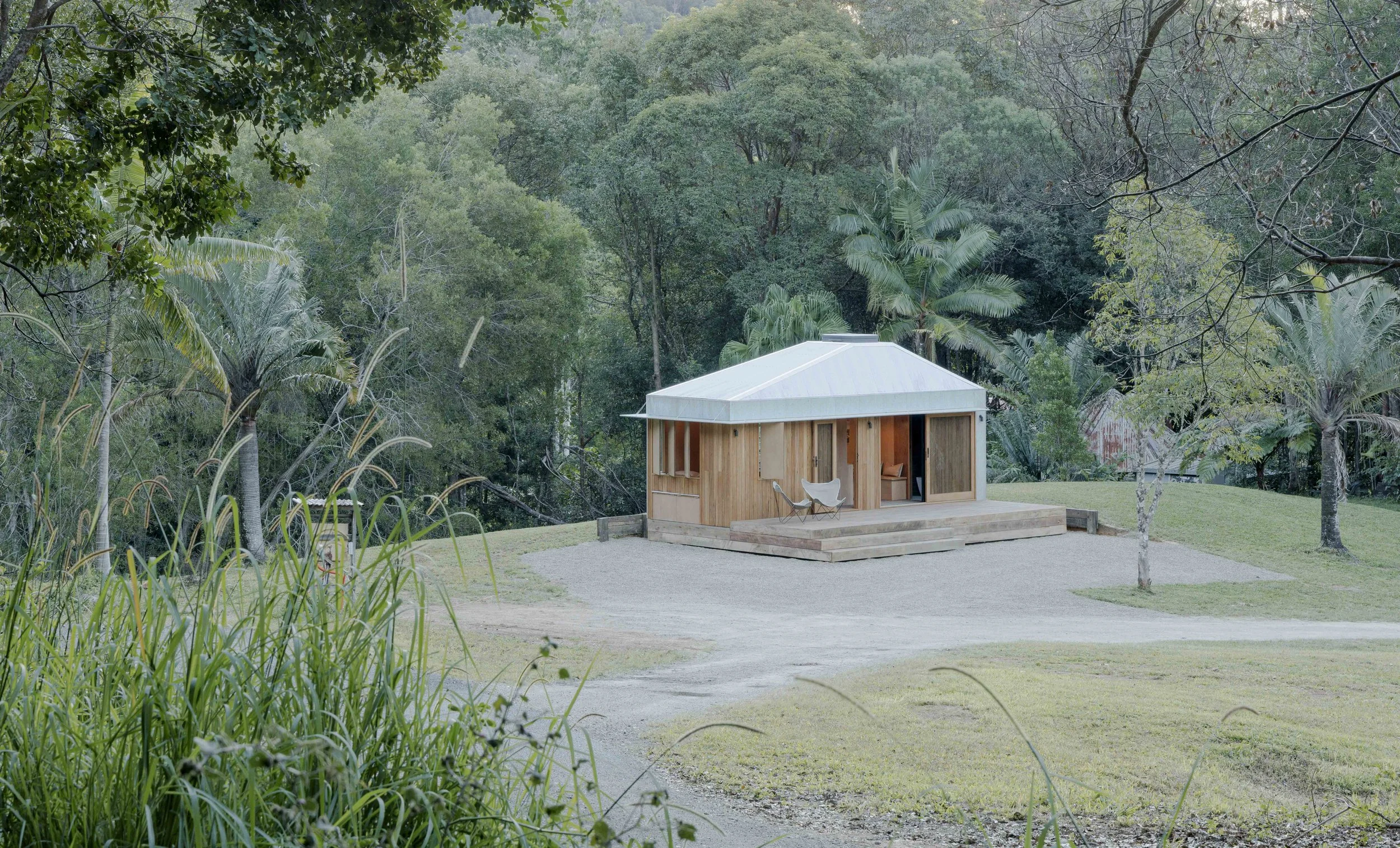
The Oculus, is a great solution Perfect for homeowners, rural businesses, boutique stays, and modern minimalists.
What DA-exempt means in practice
For most of our residential customers — landholders with an existing home who want to add a well-built secondary dwelling — the regulatory path is clear. No application, no council process, no extended wait.
The Oculus arrives complete and ready to place. There is no concrete pour, no building inspection sequence, no drawn-out certification process. The 14-week build happens in our Bangalow workshop. Delivery and positioning are managed end-to-end. The structure connects to services — water, power, septic or composting where required — and it is ready to occupy.
The road-legal trailer registration is not just a technical specification. It is the design decision, made early by Chris and Hayley, that keeps the entire process simple.
How The Oculus is designed around compliance
Staying within the 4.5 tonne ADR limit is not an afterthought — it shapes the specification of every Oculus build. Three decisions in particular reflect this:
Thermally modified timber rather than hardwood. Thermally modified timber is lighter than traditional hardwood, and performs better in humid conditions — less movement, better resistance to moisture and decay. It is not a cost compromise; in a subtropical climate like the Northern Rivers, it is the more appropriate material. The weight saving also keeps the trailer comfortably within ADR limits without sacrificing finish quality.
Reduced tile coverage in the bathroom. Tiles are among the heaviest finishes in any small structure. Reducing tile coverage in the wet area meaningfully reduces overall trailer weight — and in a 21sqm building, every kilogram counts toward road compliance.
A removable drawbar. The steel drawbar is removed once The Oculus is placed on site, reducing the tow weight of the trailer. It is a small but deliberate detail — the kind of decision that reflects how seriously Chris and Hayley take the engineering behind the build.
Taken together, these decisions mean The Oculus is not a standard build that happens to sit on a trailer. It is a structure conceived from the ground up for road-legal transport — and everything in the specification follows from that.
Before you proceed
No builder or supplier — including us — should be your primary source of planning advice. We know what we build and how it is classified. We do not know every property and every council. Before signing anything or paying a deposit for any moveable dwelling, confirm with your local council or a planning consultant that your intended use is permitted on your specific land.
That call is usually short, and it protects you. It also tends to confirm what we have outlined above — that for most landholders in NSW with an existing dwelling, the path to a placed, occupied Oculus is clearer than they expected.
Want to see it before you decide?
The Oculus is live and bookable on Airbnb — our Stay Before You Own listing in the Byron Bay hinterland. Spending a night in the space is the most grounded way to understand whether it suits how you want to live.
For questions about your property, the regulations, or the process from deposit to delivery, contact Ross on 0407 661 649 or hello@retreathouse.com.au.
